Thursday, August 23, 2018
Good Day Pozziepinoy
I just read a post few years back regarding working abroad. I was diagnosed early this year and on my ARV. I just want to know how do I start seeking for a job abroad and where I can go to seek help especially with this kind of condition I have. I know somewhere there is still hope.
Thank you very much
XXX
POZZIEPINOY’S RESPONSE
Hi there.
Thanks for your email.
First of all I am happy that you are on your ARV treatment. I do hope that you are very adherent to it. Missing doses even though we have been taking them for a long time can still make the HIV resistant to our medicines so always pay attention to your medicine intake and ARV refills.
Now going back to your concern, most countries are very accepting of people living with HIV. You can apply anywhere and even disclose your HIV status to your employer with our compromising your employment. However, there are some countries that still discriminate PLHIV. These are the muslim countries and even Singapore. So if I were you, try to avoid these countries.
Like most overseas Filipino Workers, you may check online or at the POEA offices for openings. You may also directly communicate with people who you may know that can offer you a job outside the country. After that you may go through the process like how OFW's do it. I am in no position to give you advice on that process though. But from what I know, part of the medical examination is the HIV test which is required by other countries. This is by no means discriminatory but just a part of the health examination.
Having HIV is not an obstacle to employment anymore. Except for those regions or countries that I mentioned as influenced by their religion, one can apply anywhere and have a job of his or her dreams. People living with HIV can have meaningful life and still become productive members of society as long as one continues to be adherent to his or her ARV's and learn to protect oneself by focusing on his or her health.
I do hope that I was able to answer your question or concern. Please feel free to email em again if you have other concerns.
Thanks and good luck.
Need assistance?
Want to take the FREE HIV Screening?
Want to talk to someone?
Looking for a support group?
Want to volunteer?
TRR HIV Hotline Numbers
02-656-7297
0917-908-1546
TRR CARE OFFICE
OPEN DAILY
Address:
Unit 401 Lumiere Suites
#21 General Capinpin St.
Barangay San Antonio,
Ortigas Center, Pasig
If you want to join a private HIV support group in Facebook, please add Katherine Pierce, Bi Santo, Danica Oliveros and request to be added in the group. We have a lot of PLHIV, counselors, HIV doctors, advocates and supporters who you can talk to.
"Spreading Compassion"
-Project Red Ribbon-
Want to be ASSISTED for the HIV TEST??
Check this link:
If you have comments or questions, please click this link:
© Copyright. All Rights Reserved by Pozziepinoy 2012
Tags: HIV Manila, HIV Philippines, AIDS Manila, AIDS Philippines, HIV/AIDS Manila, HIV/AIDS Philippines
Tuesday, August 21, 2018
Pozziepinoy
Uphill Battle
The HIV cases in the Philippines continue to climb. From 2010 to 2018, the country has 174 percent increase in cases as reported by UNAIDS. We topped the rest of the countries in the Asian Region.
Is it because of the increasing campaign for HIV testing? Or it just is indicative of the epidemic which up to now, we don't know its extent.
For now, we just have to keep being optimistic and really hope that we can reverse the HIV epidemic in the country.
Pozziepinoy
Who is to Blame?
Recently, I was informed that one of our Duyan Kids ("Duyan Kids refer to children with HIV who serve as beneficiaries of our Duyan Program) passed away. This was heartbreaking as we were assisting him and the mom years ago for their treatment by providing them counselling, medical assistance and at times financial assistance for transportation to ensure that the mom would not miss any of the check ups of ARV refills from the HIV and AIDS Treatment Hub.
At first, it was a smooth treatment, until the mom stopped coming back to hub. Of course that means, the kid stopped his treatment too. Soon, the mom died because of AIDS related infections. The young brother of the mom took charge and started to bring the kid back to the hospital. Because of inadherence, he was already taking the second line regimen.
Once again, the treatment became smooth sailing, until the parents took away the kid to Tarlac so that the young brother could work. From then on, we never heard of the kid anymore.
As part of our responsibility, both the Treatment Hub and Project Red Ribbon tried to look for the kid. We even thought to engage the DSWD to talk to the grandparents and in case they won't help the child to continue with his treatment to get the child and put in a shelter. However, it was really difficult.
Soon we found out that the child died.
Who is to be blamed here? Did we not do our part? Did the treatment hub not do enough to educate the next of kin on their responsibilities? Did we not engage the social welfare department early on which could have assessed the level ofd responsibility of the relatives to take care of the kid? Was stigma too great for the relatives not to save the child? Did poverty played a role in getting access to life saving treatment?
What we can do now is to contemplate and evaluate what went wrong. We need to assess the current situation that may possibly be the cause of his death. We have to continue to advocate so that no life, will once again be wasted because of indifference, of lack of education and awareness when we talk about HIV and AIDS.
Saturday, August 18, 2018
Pozziepinoy
HIV and the Philippines
In a few weeks, the Living with HIV in the Philippines Blog will be reaching its seven years of existence. Its evolution in September 2011 gave rise to the advocacy, which then led to the formation of the Project Red Ribbon, one of the strongest HIV and AIDS organizations in the country, evidenced by its current partners, the Department of Health - National AIDS/STI Prevention and Control Program, the Research Institute for Tropical Medicine - AIDS Research Group, the Philippine Health Insurance Corporation, the Department of Social Welfare ad Development, the National Youth Council, the St. Lukes Global, the National Council of Churches in the Philippines, ABS-CBN News and Public Affairs and Teleperformance Philippines. Adding to our credibility as an organisation is our strong ties with the Regional -DOH Offices and the different local government units all over the country. We are also recognised by the World Health Organisation and the UNAIDS.
But despite our efforts over the years, the question still remains to be answered. Did we make progress when it comes to reversing the HIV epidemic in the Philippines? Can we say that we made an impact though the cases in the country of HIV continues to rise?
The programs of Project Red Ribbon continue to solve issues on human rights related to HIV and AIDS such as the right to HIV education, the right to quality health service and right against stigma and discrimination which are fundamentals of acceptance of sexual diversity and social inclusion. Though the Foundation can't solve issues immediately, we are trying to address issues by assisting government agencies in the formulation of guidelines for programs for HIV screening, antiretroviral therapy, and HIV and AIDS health benefits. Through consultations, we try to make the HIV programs a priority in cities in municipalities. In this way, we don't give band aid solutions to issues such as clients with HIV who have no money for transportation to and from the hospital, or clients not having money to pay for their laboratory tests and medicines for opportunistic infections, or clients being discriminated at work, school or place of abode. By our efforts we don't look at today but look for solutions so that these issues won't happen again in the future.
The cases continue to increase and this can be attributed to everyone's effort to strengthen the education campaign and promote HIV testing. But there are still things to be done. The government and NGO's can't do it alone. The private sector needs to step up. They have the funds and technology. They also have the manpower.
Project Red Ribbon will continue to make impact both at the grassroot level and the top level. We will continue to be influencers to impact change.
But despite our efforts over the years, the question still remains to be answered. Did we make progress when it comes to reversing the HIV epidemic in the Philippines? Can we say that we made an impact though the cases in the country of HIV continues to rise?
The programs of Project Red Ribbon continue to solve issues on human rights related to HIV and AIDS such as the right to HIV education, the right to quality health service and right against stigma and discrimination which are fundamentals of acceptance of sexual diversity and social inclusion. Though the Foundation can't solve issues immediately, we are trying to address issues by assisting government agencies in the formulation of guidelines for programs for HIV screening, antiretroviral therapy, and HIV and AIDS health benefits. Through consultations, we try to make the HIV programs a priority in cities in municipalities. In this way, we don't give band aid solutions to issues such as clients with HIV who have no money for transportation to and from the hospital, or clients not having money to pay for their laboratory tests and medicines for opportunistic infections, or clients being discriminated at work, school or place of abode. By our efforts we don't look at today but look for solutions so that these issues won't happen again in the future.
The cases continue to increase and this can be attributed to everyone's effort to strengthen the education campaign and promote HIV testing. But there are still things to be done. The government and NGO's can't do it alone. The private sector needs to step up. They have the funds and technology. They also have the manpower.
Project Red Ribbon will continue to make impact both at the grassroot level and the top level. We will continue to be influencers to impact change.
Friday, August 3, 2018
Wednesday, July 18, 2018
Pozziepinoy
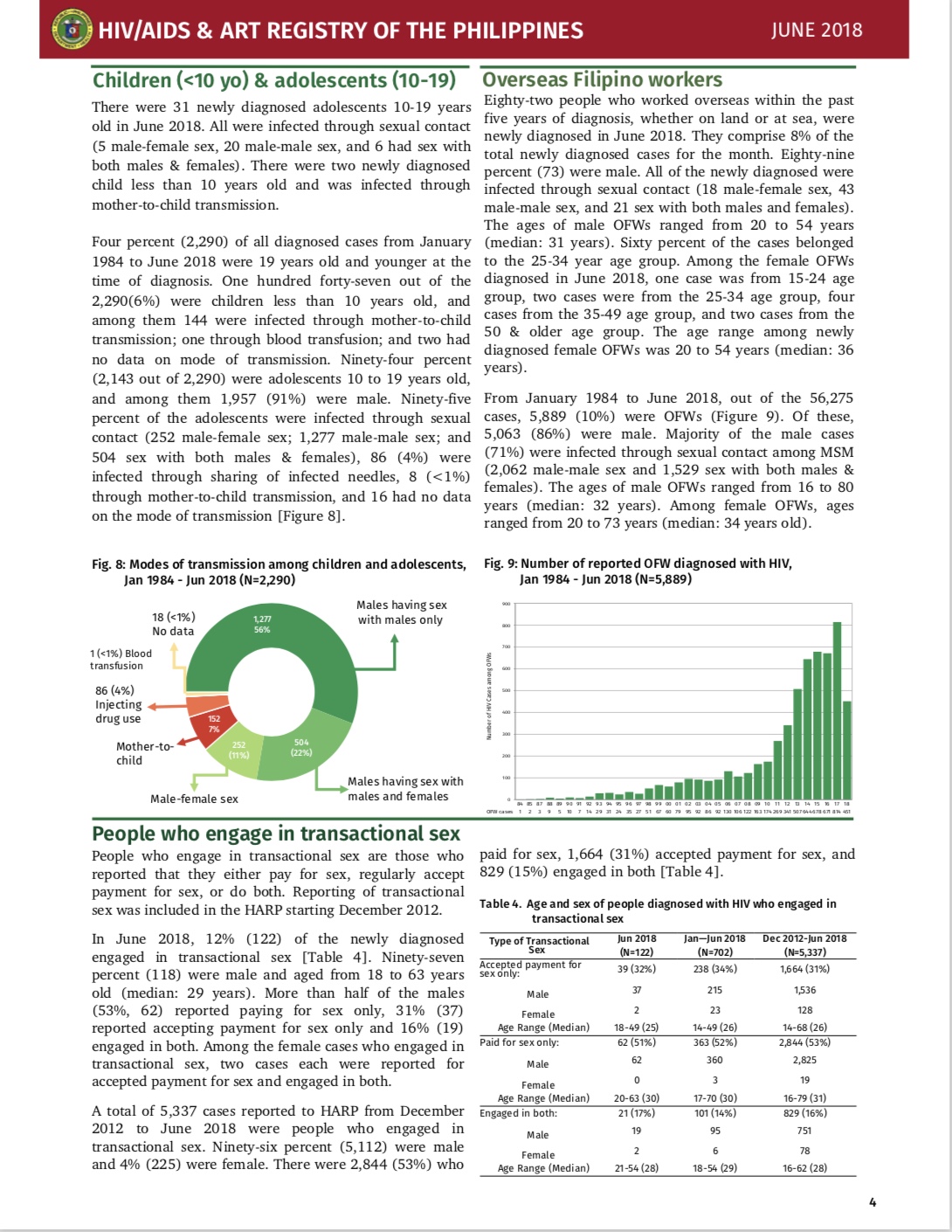
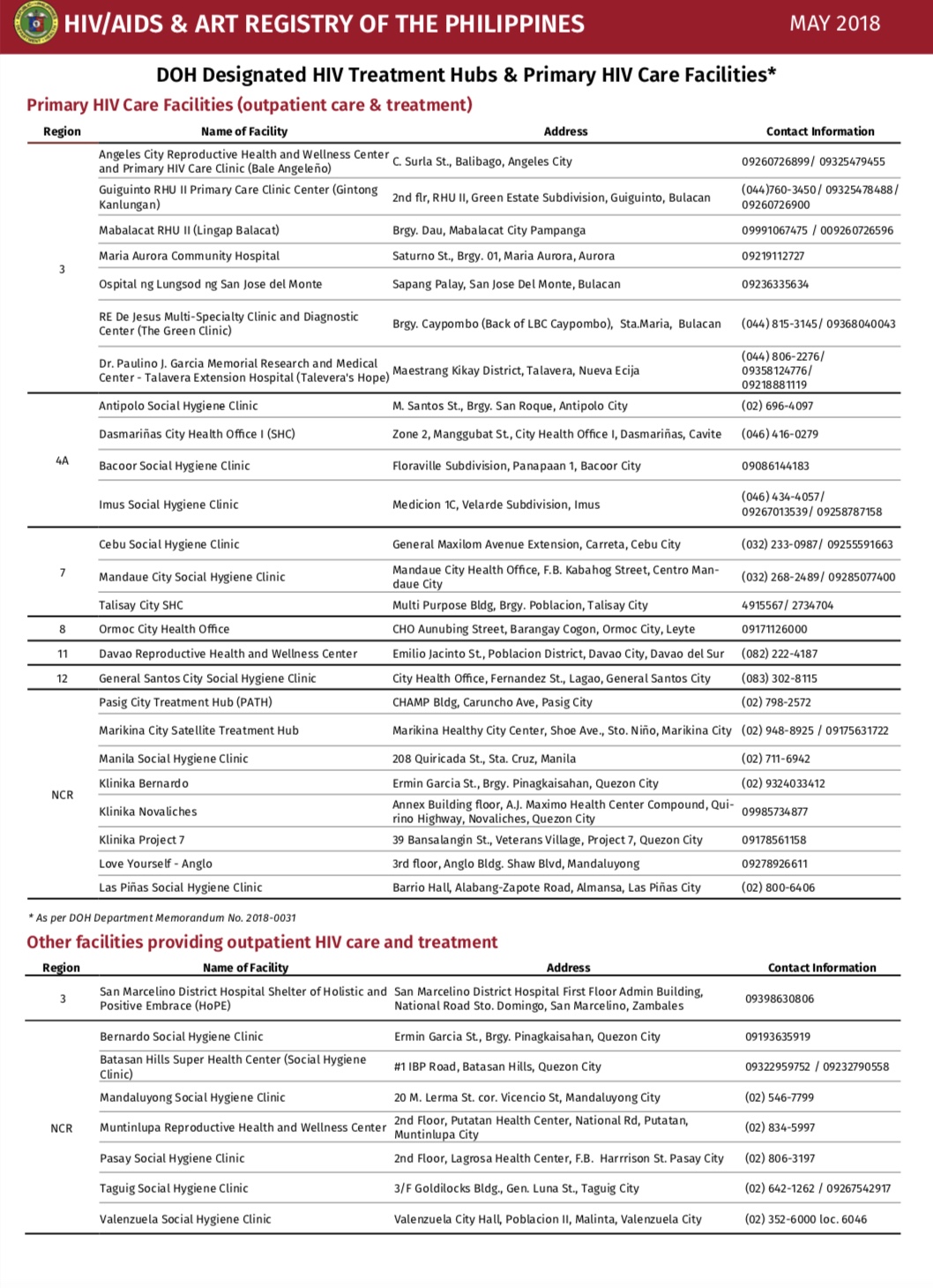
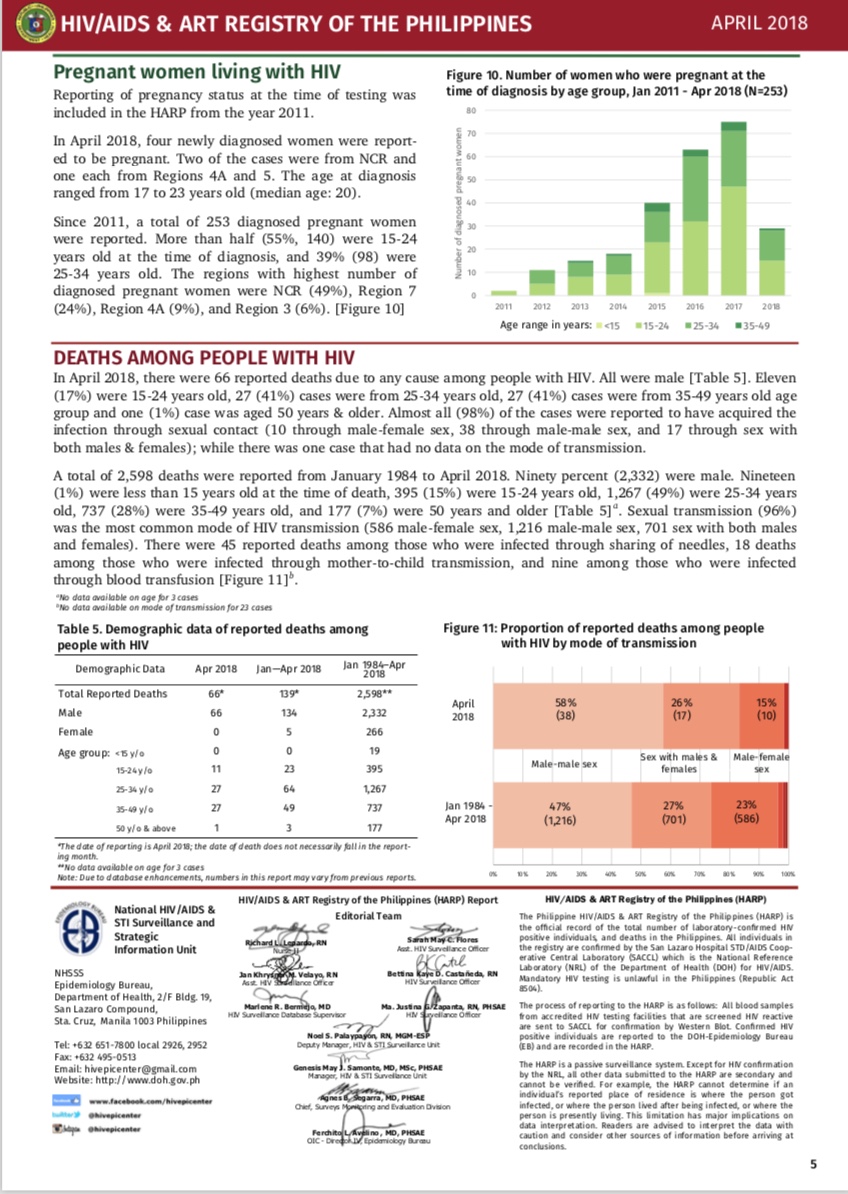
Philippine HIV and AIDS Registry: May 2018 Report
In May 2018, there were 950 new HIv cases reported. 93% reported were male and almost half belong to the 25-34 age range.
Since 1984, there were 55,282 reported HIV cases with 2,628 reported deaths.
Source: Epidemiology Bureau, Department of Health
For the full report, see below.
Tuesday, July 3, 2018
Saturday, June 2, 2018
Pozziepinoy
Leading By Example: Health Secretary took the HIV Screening
In May 16, 2018, as a kickoff activity of the Department of Health, the World Health Organisation, the Philippine National AIDS Council, the Manila Social Hygiene Clinic and Project Red Ribbon, a free and confidential HIV Screening in the Workplace was conducted from 9am to 5pm for DOH Central Offices. More than 50 volunteers of Project Red Ribbon facilitated the HIV Screening to employees including the Health Secretary Duque and majority of the Assistant and Undersecretaries of Health. 440 employees took the HIV screening.
Subscribe to:
Posts (Atom)